
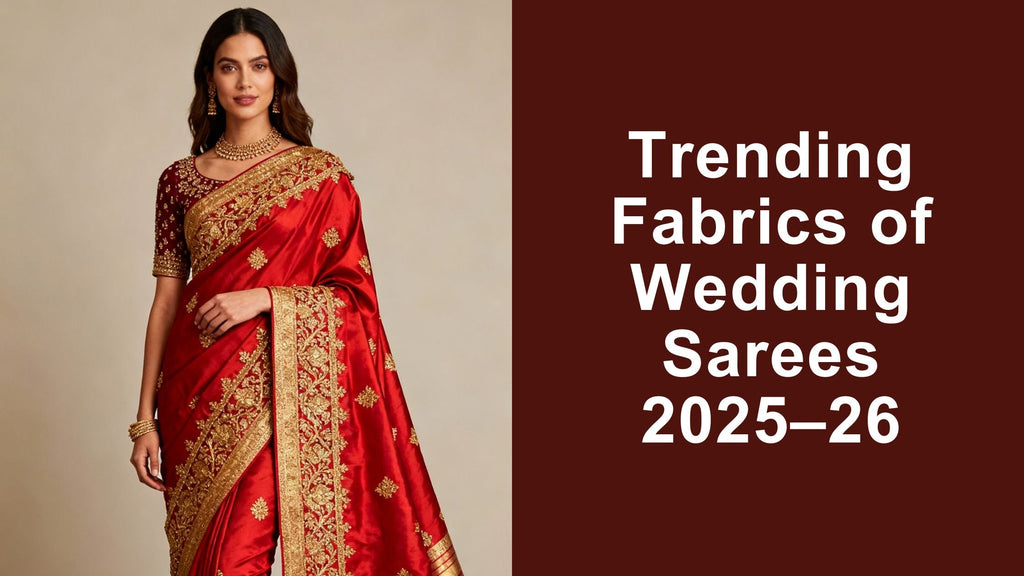
Trending Fabrics of Wedding Sarees 2025–26
Wedding fashion in 2025–26 is all about fabric-first choices. Brides and wedding guests are focusing not just on colour and design, but on how the saree drapes, feels for long hours, and photographs across multiple events. Among all textiles, the most loved and trending fabrics of wedding sarees are Banarasi, cotton and silk. Each fabric brings its own personality—regal, refreshing or luxurious—and can completely change the look of the same colour or design.
This blog explains in detail the Banarasi fabrics of wedding sarees, cotton fabrics of wedding sarees and silk fabrics of wedding sarees, so you can plan a complete wedding wardrobe that feels comfortable, looks rich and suits your style.
Banarasi Fabrics of Wedding Sarees

Banarasi fabrics of wedding sarees remain at the top for 2025–26, especially for brides and close family members. Woven in traditional looms with intricate motifs and zari, Banarasi sarees represent heritage, luxury and timeless Indian bridal style.
Why Banarasi is trending for 2025–26
-
Royal look: Banarasi fabrics of wedding sarees have a natural sheen and structured drape that look royal in photographs and live ceremonies.
-
Versatility: They work for pheras, reception, sangeet, engagement and even post-wedding temple visits.
-
Heirloom value: A good Banarasi wedding saree can be passed down for generations as an emotional and aesthetic treasure.
Designers are updating Banarasi fabrics with:
-
Lighter silk bases so they are easier to wear for long functions.
-
Modern colour palettes like pastels, jewel-tones and dual tones instead of only traditional red and maroon.
-
Minimal, fine motifs for brides who prefer subtle luxury rather than very heavy patterns.
Types of Banarasi fabrics for wedding sarees
-
Katan Banarasi
-
Pure silk with a firm yet smooth texture.
-
Ideal for rich zari work, jangla designs, heavy borders and grand pallus.
-
Perfect for the main bridal saree or premium reception look.
-
-
Banarasi Georgette
-
Lighter and more fluid than katan, but still retains Banarasi motifs and zari.
-
Suitable for brides who want Banarasi designs with more movement and comfort.
-
Great for sangeet, cocktail or lighter wedding ceremonies.
-
-
Tissue Banarasi
-
Sheer, shimmery fabric that glows under light.
-
Ideal for reception, evening pheras or destination weddings where you want drama with comfort.
-
-
Banarasi Organza / Silk Organza with Banarasi Borders
-
Combines airy organza texture with Banarasi details on border and pallu.
-
Very trendy among modern brides who like a mix of tradition and fashion-forward styling.
-
Styling Banarasi fabrics of wedding sarees
-
Blouses:
-
Traditional – high-neck or elbow-sleeve silk blouses with zari borders.
-
Modern – sleeveless, deep-back, corset or peplum blouses to balance heavy weaves.
-
-
Jewellery:
-
Temple jewellery, Kundan, Polki and antique gold sets look stunning with Banarasi fabrics.
-
-
Events to wear:
-
Main wedding day, reception, griha-pravesh, important pujas and family functions.
-
Cotton Fabrics of Wedding Sarees

Cotton fabrics of wedding sarees are the under-rated heroes of 2025–26. While silk and Banarasi steal the spotlight, cotton wedding sarees are trending strongly for haldi, mehendi, daytime poojas, intimate home weddings and pre/post wedding rituals.
Why cotton wedding sarees are in demand
-
Comfort: Cotton fabrics of wedding sarees are breathable and light, perfect for hot weather, long rituals and outdoor settings.
-
Natural, organic vibe: Many brides prefer sustainable, handloom and organic cottons to align with eco-conscious values.
-
Understated elegance: Cotton can look very sophisticated with the right weave, border and styling—less flashy yet impactful.
Types of cotton fabrics of wedding sarees
-
Handloom Cotton Sarees
-
Rich in texture with an artisanal feel.
-
Often come with contrast borders and traditional motifs.
-
Beautiful for haldi, mehendi and pre-wedding homa or puja.
-
-
Cotton-Silk Wedding Sarees
-
Blend of cotton comfort and silk sheen.
-
Fall better than pure cotton and look more festive while still being breathable.
-
Great choice for bridesmaids, mothers of the bride/groom and daytime ceremonies.
-
-
Khadi and Organic Cotton Sarees
-
Very natural, rustic and rooted in Indian textile heritage.
-
Paired with statement jewellery, they create a unique, minimal bridal look.
-
-
Muslin / Fine Cotton Sarees
-
Extremely soft, light and airy.
-
Can be embroidered or printed for a delicate bridal feel, ideal for intimate or minimalist weddings.
-
Styling cotton fabrics of wedding sarees
-
Blouses:
-
Hand-block printed, embroidered cotton or cotton-silk blouses.
-
For a more dressed-up look, pair with silk or brocade blouses to elevate the saree.
-
-
Jewellery:
-
Oxidised silver, temple jewellery, terracotta, pearls or minimal gold pieces.
-
-
Events to wear:
-
Haldi, mehendi, pre-wedding rituals, small home ceremonies, daytime temple visits and casual post-wedding functions.
-
Silk Fabrics of Wedding Sarees

Silk fabrics of wedding sarees are always at the heart of Indian bridal fashion. In 2025–26, silk continues to be the most important fabric family for brides who want richness, drape, and ceremonial presence.
Why silk wedding sarees are evergreen
-
Luxurious drape: Silk fabrics fall beautifully, structure the pleats and give a rich silhouette.
-
Cultural importance: Many regions specifically prescribe silk for auspicious rituals and temple weddings.
-
Variety: There are many silk types to choose from – Kanchipuram, Mysore, Tussar, Dupion, satin-silk and more.
Key silk fabrics of wedding sarees for 2025–26
-
Kanchipuram (Kanjivaram) Silk Sarees
-
Heavy, rich and highly durable with strong borders and contrast pallus.
-
Famous for temple designs, checks, floral and peacock motifs.
-
Preferred for South Indian weddings and grand mandap rituals.
-
-
Mysore Silk Sarees
-
Softer, smoother and more fluid than Kanjivaram.
-
Subtle sheen with simpler borders; comfortable for long hours.
-
Great for receptions, pujas and lighter wedding functions.
-
-
Tussar Silk Sarees
-
Slightly textured, with a matt-gloss look.
-
Look sophisticated in earthy and pastel colours with fine embroidery.
-
Ideal for intimate weddings, engagement and day receptions.
-
-
Dupion Silk Sarees
-
Slightly crisp and structured, holds shape very well.
-
Perfect for contemporary drapes, pleat styles and designer blouses.
-
Trending for 2025–26 bridal and bridesmaid collections.
-
-
Satin-Silk Wedding Sarees
-
Ultra-smooth, high-shine finish.
-
Works wonderfully for modern reception and cocktail bridal looks.
-
-
Organza-Silk and Tissue Silk Sarees
-
Lightweight with shimmering texture.
-
Very popular for destination weddings, receptions and day weddings with pastel themes.
-
Styling silk fabrics of wedding sarees
-
Blouses:
-
Heavy zari blouses, velvet blouses, embroidered or stone-work designs for grand events.
-
Minimal silk or satin blouses for a clean, luxurious look.
-
-
Jewellery:
-
Temple jewellery with Kanchipuram and traditional silks.
-
Diamonds, Polki or pearls with pastel and tissue silk sarees.
-
-
Events to wear:
-
Main wedding ceremonies, reception, engagement, sangeet and high-profile family functions.
-
Comparing Banarasi, Cotton and Silk Fabrics for Wedding Sarees
| Aspect | Banarasi Fabrics of Wedding Sarees | Cotton Fabrics of Wedding Sarees | Silk Fabrics of Wedding Sarees |
|---|---|---|---|
| Look | Royal, intricate, rich | Natural, fresh, understated | Luxurious, elegant, versatile |
| Weight | Medium to heavy (now also in lighter weaves) | Light to medium | Varies from light (tissue, organza-silk) to heavy |
| Best Events | Main wedding, reception, grand rituals | Haldi, mehendi, puja, intimate ceremonies | All major ceremonies, receptions, engagement |
| Comfort for long hours | Good in softer versions, may feel heavy in katan | Very comfortable, ideal in hot weather | Generally comfortable, depends on weave and type |
| Styling vibe | Heritage and regal | Simple, earthy, elegant | Classic, premium and camera-friendly |
How to Choose the Right Fabric for Your Wedding Sarees (2025–26)
-
Based on climate and venue
-
Hot / humid, outdoor: Cotton fabrics of wedding sarees, light silk-cotton blends, organza-silk.
-
Indoor AC venues: Banarasi fabrics of wedding sarees and rich silk fabrics work comfortably.
-
-
Based on event type
-
Ritual-heavy, traditional ceremonies: Silk and Banarasi are ideal.
-
Casual or intimate rituals at home: Cotton wedding sarees keep you relaxed yet elegant.
-
Modern, high-glam reception: Satin-silk, tissue silk or lighter Banarasi georgette.
-
-
Based on personal style
-
Love royal and grand looks: Focus on Banarasi fabrics of wedding sarees and heavy silks.
-
Prefer minimal and natural: Choose cotton fabrics of wedding sarees and soft silks with subtle work.
-
Modern yet ethnic: Mix silk and Banarasi with contemporary blouses, or pick silk-organza and tissue.
-
Sample Bridal Fabric Plan for 2025–26
-
Main wedding day (pheras / mandap):
-
Option 1: Banarasi katan silk bridal saree.
-
Option 2: Kanchipuram silk saree with rich borders.
-
-
Reception or cocktail:
-
Satin-silk saree or tissue silk with modern embroidery.
-
-
Haldi and mehendi:
-
Cotton fabrics of wedding sarees or cotton-silk blends in bright, happy colours.
-
-
Intimate pujas / griha-pravesh:
-
Light Banarasi georgette or soft silk sarees.
-
The trending fabrics of wedding sarees 2025–26 clearly show one thing: every bride and wedding guest can find her own balance of comfort, heritage and glamour. Banarasi fabrics of wedding sarees give you regal impact, silk fabrics of wedding sarees bring timeless luxury, and cotton fabrics of wedding sarees keep you grounded, comfortable and effortlessly beautiful during long celebrations.
Related post
30
Nov
10
Oct
05
Oct
01
Oct
28
Sep
RECENT POSTS
05.October.2025
Latest Sarees for Festival 2025 | Colors, Fabrics, Party Wear & Banarasi Picks
0 Comments

